Portal, AZ - Rodeo, NM
Serving The Communities Of Portal and Rodeo (www.portal-rodeo.com)
Serving The Communities Of Portal and Rodeo (www.portal-rodeo.com)
Trash Collection
Portal, Arizona
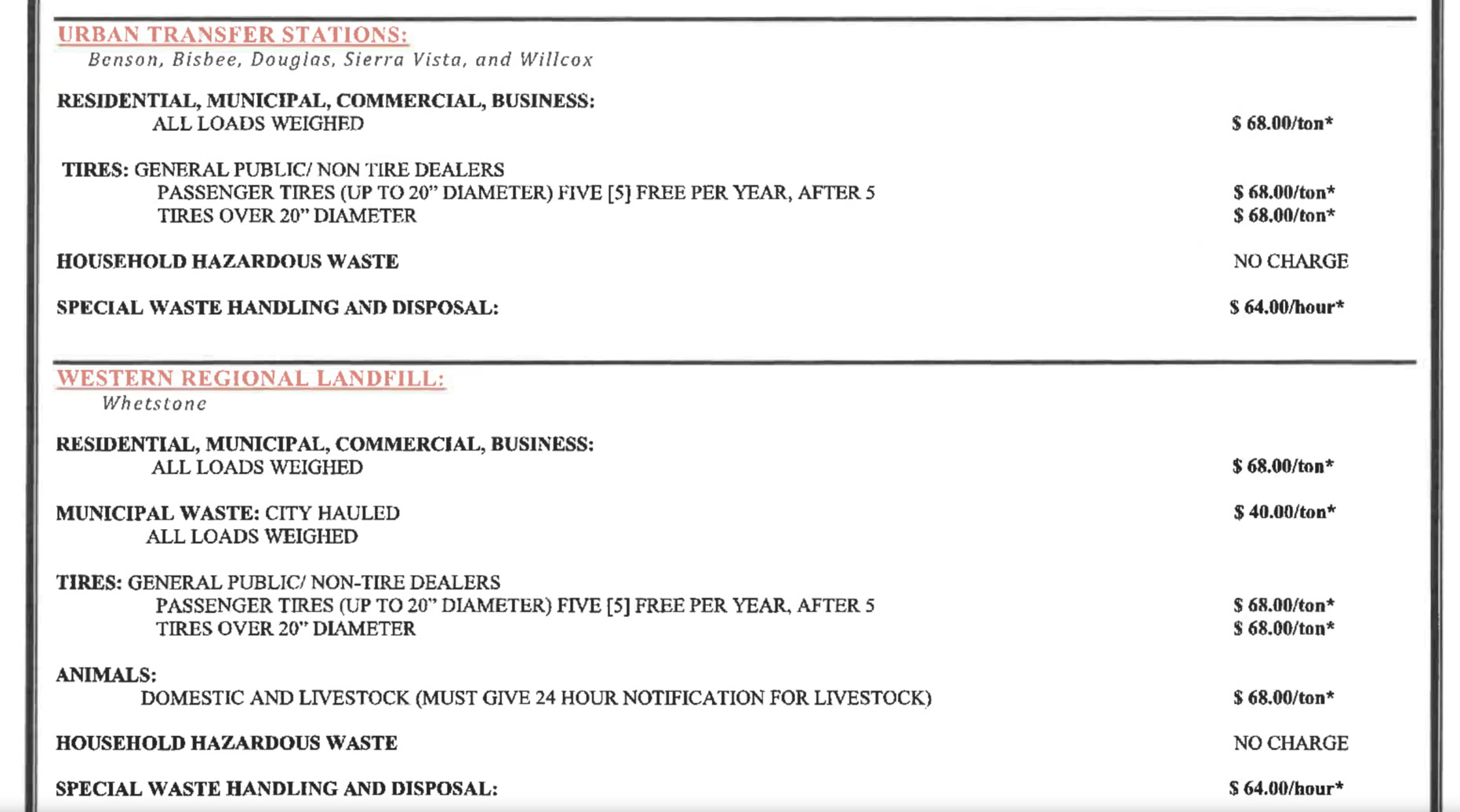
Cochise County Department Of Solid Waste:
https://www.cochise.az.gov/solid-waste/home
Wednesday and Saturday (8:00 - 11:00 am (AZ)
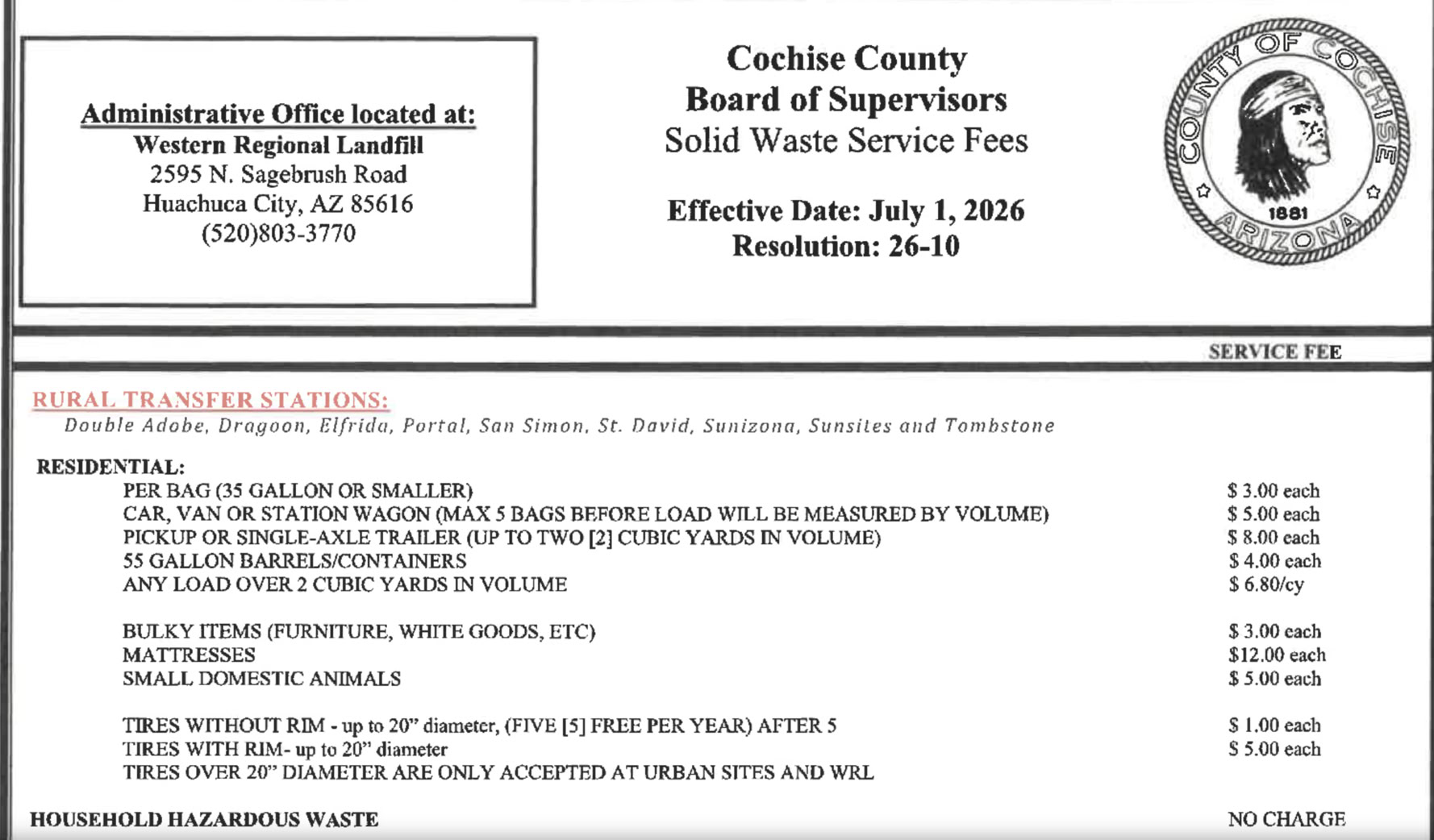
Each bag: $3.00 (As Of July 1, 2026)
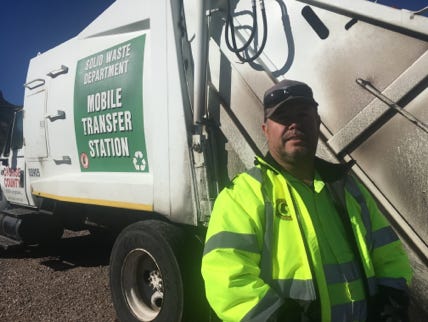
Carlos Durazo

Examples Of Acceptable & Hazardous Waste:
Motor oil/filters
Vehicle batteries
Batteries (small or vehicle)
Hazardous chemicals (put in a labelled container)
What Happened To Free Dump Day?
* Notice - Free Dump Day **
The Free Dump Day Program is changing. July 1st through September 30th an application will be available here to either download or fill out electronically. Applications must be postmarked or filled out electronically by September 30th. Before filling out the application please review the Free Dump Day Terms and Conditions and know which site you will be using your coupon at. If you have any questions about this program, please call the dedicated Free Dump voicemail at 520-432-9655 or email fdd@cochise.az.gov
Terms and Conditions
◦ Applications must be received or postmarked by September 30 and completed by the current property owner.
◦ Property owners must be no more than three years behind on their property taxes (not including the most current tax year).
◦ Must be a resident of Cochise County - mailing address of parcel must be within Cochise County.
◦ The valuation of the property given by the Assessor's Department must be either: Owner Occupied Residential, Rental/Lease Residential, or Historical Residential.
◦ A property owner can only be approved for a maximum of 10 applications (1 per parcel number/address).
◦ Authorized users/Property owners must provide photo ID at the transfer station for validation purposes.
◦ The certificate holds no specific cash value.
◦ Valid for one non-commercial passesnger vehicle/truck/trailer load of refuse weighing a max of 1,000 lbs. or half a ton. Any customer load over 1,000 lbs. will be charged for additional weight at the current tipping fee rate at the Transfer Stations.
◦ If using the certificate at a Rural Station, it is valid for up to $32 off the total cost of a single load of refuse.
◦ Valid for one calendar year, January through December, only to be used at the specified Cochise County location listed on this application. Please visit Cochise County refuse location for location information or call (520)803-3770.
◦ If disposing of more than 5 passenger/truck tires or any agriculture tires, an application must use the Western Regional Landfill location.
◦ Applicants will be notified by email or phone if application was approved/denied.
◦ Certificates will NOT be mailed and will be available for use at the Transfer Station that was specified in the application only.
◦ If any changes need to be made to the application after submittal, please contact the dedicated Free Dump Voicemail at (520)432-9655
Transfer Station Locations
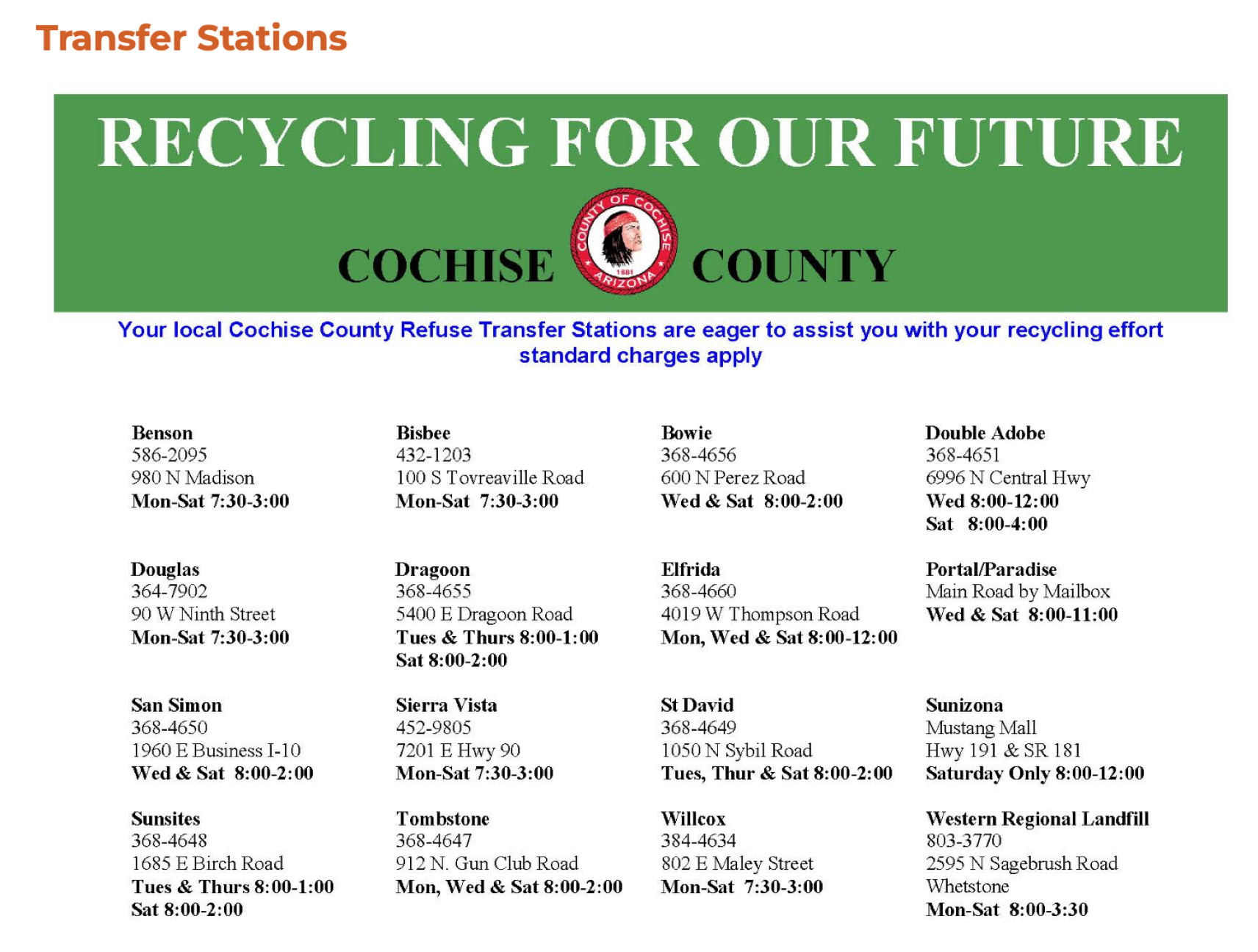
◦ Benson Transfer Station – 980 N Madison St., Benson, AZ 85602
◦ Bisbee Transfer Station – 100 S. Tovreaville Rd., Bisbee, AZ 85603
◦ Bowie Rural Transfer Station – 600 N Perez Rd., Bowie, AZ 85643
◦ Double Adobe Rural Transfer Station – 6996 N Central Highway, McNeal, AZ 85617
◦ Douglas Transfer Station – 90 W 9th St., Douglas, AZ 85607
◦ Dragoon Rural Transfer Station – 5400 E Dragoon Rd., Dragoon, AZ 85609
◦ Elfrida Rural Transfer Station – 4019 W Thompson Rd., Elfrida, AZ 85610
◦ Portal/Paradise Rural Transfer Station – Main Road by Mailbox, Portal, AZ 85632
◦ San Simon Rural Transfer Station – 1960 E. Business I-10, San Simon, AZ 85632
◦ Sierra Vista Transfer Station – 7201 E Hwy 90, Sierra Vista, AZ 85635
◦ St. David Rural Transfer Station – 1050 N Sybil Rd., St. David, AZ 85630
◦ Sunizona Rural Transfer Station – Highway 191 & State Route 181, Pearce, AZ 85625
◦ Sunsites Rural Transfer Station – 1685 E. Birch Rd., Sunsites, AZ 85625
◦ Tombstone Rural Transfer Station – 912 N. Gun Club Rd., Tombstone, AZ 85638
◦ Western Regional Landfill – 2595 N Sagebrush Rd., Huachuca City, AZ 85616
◦ Willcox Transfer Station – 802 E. Maley St., Willcox, AZ 85643
Rodeo, New Mexico
(For New Mexico Residents Only!)
Hours Of Operation:
Tuesday & Thursday 8:00 am - 2:00 pm
Saturday 8:00 am - Noon
Operator: Victor Somoza 575.557.2390
Lorina Moores
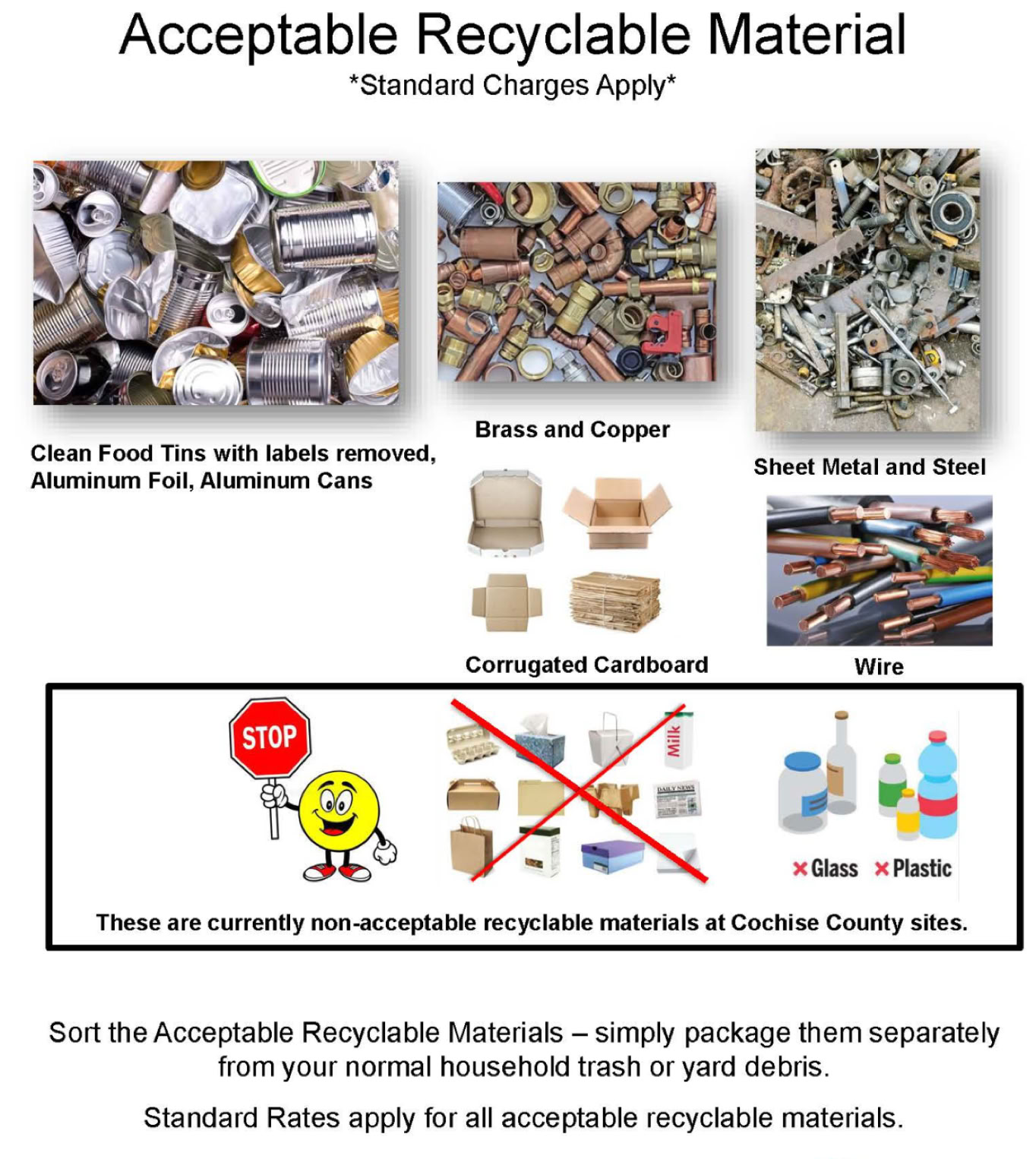
They accept aluminum cans, scrap metal and used motor oil (not contaminated with water or antifreeze), but not much else that can be recycled.
Additional information can be obtained from Bob Hill, the Hidalgo County Manager (575) 542-9428 (office) (575) 542-3414 (fax) (575) 313-1089 (cell).
Fred Anzaldua
Why It’s Important to Handle Asbestos Safely
Asbestos removal professional in protective gear.
Improper asbestos cleanup can release tiny fibers into the air. This raises the risk of serious illnesses like mesothelioma, lung cancer and asbestosis. The damage asbestos-related diseases cause is irreversible. These diseases are treatable but incurable.
In the U.S. alone, around 39,000 people die each year from diseases connected to asbestos exposure, according to the Asbestos Disease Awareness Organization. Every year, more than 200,000 people die from asbestos exposure at work. This makes up more than 70% of all job-related cancer deaths. These diseases often develop 20 to 60 years after exposure, and even short asbestos exposure can be harmful.
Mishandling it can also risk family, neighbors and the public. For example, Raeleen Minchuk Prokopetz tells us she was exposed to asbestos as a baby, crawling in her grandparents’ home during renovations. Doctors diagnosed Prokopetz with malignant mesothelioma decades later.
She shares that now her son works in restoration and his duties include asbestos abatement. She says, “He’s 21 years old and working with asbestos. His risk of exposure scares me.” While worried for his safety, Raeleen tells us she’s proud of him for helping others reduce their risk safely.
How to Handle and Dispose of Asbestos
The safest way to handle and dispose of asbestos is to hire a licensed asbestos abatement professional. These experts follow strict rules and best practices to protect others from risk. If you suspect there’s asbestos in your home, don’t disturb it. Damaging or moving it can release dangerous asbestos fibers into the air.
Asbestos containment is key. Abatement experts seal the area with polyethylene sheeting and duct tape. They also use HEPA-filtered negative air machines. These machines pull in fresh air and stop harmful asbestos fibers from escaping. This setup keeps the contaminated space under control and protects the rest of the home during the removal process.
Steps Professionals Follow for Proper Asbestos Handling
Assess and plan the project: First, licensed abatement teams check the site for asbestos. They look at the type and amount present. Next, they figure out how to contain it. Then they get the necessary permits before beginning work.
Seal off the work area: Workers enclose the area with plastic sheeting and warning signs. Negative air pressure machines with HEPA filters help with asbestos containment, drawing air inward.
Wear protective gear: Workers wear N-100 or P-100 respirators. They also wear disposable suits, gloves and goggles. This gear helps protect them from exposure.
Remove and contain asbestos: Workers wet materials to prevent dust, then double-bag them in thick plastic. Workers place the bags in sealed, labeled containers for transport to approved landfills.
Decontaminate and clean: Before leaving, workers must remove dust from their gear and clothes. The site is cleaned with wet wipes and HEPA vacuums to eliminate lingering fibers.
We spoke with asbestos abatement expert and industrial hygienist Tony Rich about his advice for home owners or renters who suspect asbestos is present in their home. He tells us, “Do not disturb suspect asbestos-containing materials. Hire a reputable asbestos control professional for consultation. A licensed asbestos abatement contractor has the proper training and personal protective equipment to remove an asbestos-containing material safely and minimize exposure risks.”
Rich adds, “It is not recommended for homeowners or renters to remove asbestos themselves. Microscopic asbestos dust can become airborne and contaminate surfaces throughout the home, as well as settle inside the HVAC duct system and various electronics. Asbestos particles can become embedded in porous contents and materials such clothing, bedding, carpet, upholstery, curtains, etc.”
How Is Asbestos Recycled?
Asbestos is recycled using special equipment and expert knowledge. It involves chemical, mechanical or microwave methods of destroying asbestos fibers and turning them into safe materials like glass, ceramic or concrete filler.
This process keeps asbestos out of landfills and removes the health risk. However, in the U.S., only a few government or research-backed programs currently recycle asbestos. It’s not something homeowners can do or access.
Methods for Professional Asbestos Recycling
▪ Heated sodium hydroxide: This method heats asbestos in sodium hydroxide to more than 1,250°C. The heat breaks down the fibers, turning them into a safe glass material. This glass is used in tiles, ceramics, and roadwork.
▪ High-speed milling: Machines grind asbestos at high speeds until the fibers break apart. The leftover material is a safe mineral.
▪ Microwave treatment: Microwaves heat the asbestos and turn it into solid materials like ceramic bricks or porcelain tiles.
Some methods can reduce asbestos waste up to 99%. The results are safe to use, but the technology is still expensive and not easy to access. In the U.S., the Department of Defense has used asbestos recycling at certain sites, but most local removal companies still use traditional asbestos disposal or containment methods. This means most asbestos is disposed of in landfills because recycling options are so limited.
Benefits of Recycling Asbestos Materials
Recycling asbestos offers benefits such as reduced environmental harm, safer disposal and the ability to repurpose waste into new materials. In some cases, it may also help lower overall project costs. Turning asbestos into safe materials is a permanent solution that keeps harmful fibers out of landfills and the environment.
Advantages of Recycled Asbestos
▪ Cost offset: Selling recycled materials can help offset abatement costs in large-scale projects.
▪ Environmental impact: Fewer hazardous materials go to landfills, protecting workers and nearby communities.
▪ Ethical disposal: Eliminating asbestos fibers prevents future exposure risks and disease.
▪ Material reuse: Recycled asbestos can be turned into usable products like tiles and road base.
▪ Waste reduction: Recycling can shrink the volume of asbestos waste up to 99%.
While private companies continue refining the technology to make it more cost-effective, it’s still not available to the public. If you’re interested in advocating for asbestos recycling to become more widely available, you can take steps to support that goal. You can contact members of Congress to urge support for funding, research and infrastructure needed to expand recycling programs.
Getting involved with national advocacy groups like the Environmental Working Group, which campaigns for strong asbestos regulations and public health protections, can potentially help advance these efforts. Working with mesothelioma advocacy groups like ADAO may also help raise awareness about the benefits of asbestos recycling. ___________________________________________________________________